Sleep Aid Guide: Types, Safety & How to Choose | Adapt X.1

What a sleep aid is, the main types of sleeping aids, what the evidence says, how to choose safely, and a melatonin-free option. Sources linked.

What is a sleep aid?

A sleep aid, also called a sleeping aid, is anything you take or use to help you fall asleep or stay asleep. Some are medicines. Some are dietary supplements. Some are not products at all, such as a structured program that changes your sleep habits.

That wide meaning is why shopping for one gets confusing. Two products on the same shelf can work in completely different ways, carry different risks and suit different people. This guide sorts them out, so you can pick based on your own problem rather than the loudest label.

The short version
  • For long-term insomnia, cognitive behavioral therapy is usually the first thing to try (NHLBI).
  • Over-the-counter sleep aids are often antihistamines. Talk to your doctor before using them for insomnia.
  • Supplements are not approved by the FDA before they are sold, so the label and the evidence matter (FDA).
  • If poor sleep lasts for months, get it checked. A sleep aid should not hide a problem that needs care.

The main types of sleep aids

Most sleep aids fall into one of six groups. Here is what each one is, and what trusted health sources say about it.

Behavioral programs (CBT-I)

Cognitive behavioral therapy for insomnia teaches new sleep habits and ways of thinking about sleep. NCCIH calls it the most strongly recommended treatment for insomnia, and the NHLBI says it is usually the first option for long-term insomnia.

Sources: NCCIH, NHLBI

Over-the-counter antihistamines

Many products sold as an OTC sleep aid contain an antihistamine. They may make you sleepy, but the NHLBI advises talking to your doctor before taking them for insomnia. Read our guide to the best over-the-counter sleep aid for what to check.

Source: NHLBI

Prescription sleep medicine

These are prescribed by a clinician after looking at your symptoms, health and other medicines. They are a medical decision, so the right person to ask about them is your doctor or pharmacist.

Melatonin

Melatonin is a hormone your brain makes in response to darkness, and in the US it is sold as a supplement. Short-term use appears safe for most people, but long-term safety information is lacking, and tested products have not always matched their labels.

Source: NCCIH

Herbal sleep aids

Valerian, chamomile and kava are common choices, but NCCIH reports that the evidence for insomnia is weak or unproven. Kava has been linked to serious liver injury. See our honest look at the best herbal sleep aid options.

Source: NCCIH

Melatonin-free supplements

This group avoids added hormones and uses other ingredients instead. Quality varies a lot, so look for a short label, a stated dose and a real study of the finished formula. Adapt X.1 is one example, taken as an oral spray.

How to choose a sleep aid

The best sleep aid for you depends on what is actually going wrong at night. Work through these five questions before you buy anything.

  1. What is the real problem? Trouble falling asleep, waking at night and waking too early can have different causes. Our guide to falling asleep versus staying asleep helps you tell them apart.
  2. How long has it been going on? A rough week after travel or stress is different from insomnia that happens 3 or more nights a week for 3 months or longer, which is how the NHLBI describes chronic insomnia.
  3. What else do you take? Check every sleep aid against your medicines, alcohol use and health conditions. A pharmacist can do this in a few minutes.
  4. Can you read the whole label? Look for each ingredient and its amount. Be careful with long blends that hide the dose.
  5. Is there evidence for this exact product? A study on one ingredient does not prove a finished formula works. Look for a placebo-controlled trial, and a non-habit-forming sleep aid if you are worried about relying on one.

Sleep aid safety: what to know first

A sleep aid can feel harmless because it is sold next to the vitamins. These points are worth knowing before you use any of them.

  • Supplements are not pre-approved. By law, the FDA does not approve dietary supplements or their labels before they are sold, and only a drug can legally claim to treat, cure or prevent a disease (FDA).
  • Older adults may need extra care. Melatonin may stay active longer in older people and cause daytime drowsiness (NCCIH). See our OTC sleep aid guide for seniors.
  • Pregnancy and breastfeeding. There is little research on melatonin safety in pregnancy or breastfeeding (NCCIH). Ask your clinician before using any sleep aid.
  • Do not mix without asking. Avoid combining sleep aids with each other or with alcohol unless a clinician has told you it is safe.
  • Know when to get help. Loud snoring, gasping in your sleep, dangerous daytime sleepiness, or low mood that keeps you awake all deserve a medical visit rather than a new product.

For more detail, read our checklist for the safest sleep aid.

Try this alongside any sleeping aid

Adults need 7 or more hours of sleep a night (CDC). No sleeping aid can make up for a schedule that leaves too little time for it. The NHLBI recommends these habits:

  • Go to bed and wake up at the same time every day, including weekends.
  • Keep your bedroom cool, quiet and dark.
  • Avoid caffeine, nicotine and alcohol close to bedtime.
  • Exercise during the day, finishing at least 5 to 6 hours before bed.
  • Avoid naps, especially in the afternoon.
  • Keep regular mealtimes and limit drinks near bedtime.
  • Build a short wind-down routine and learn a way to manage stress.
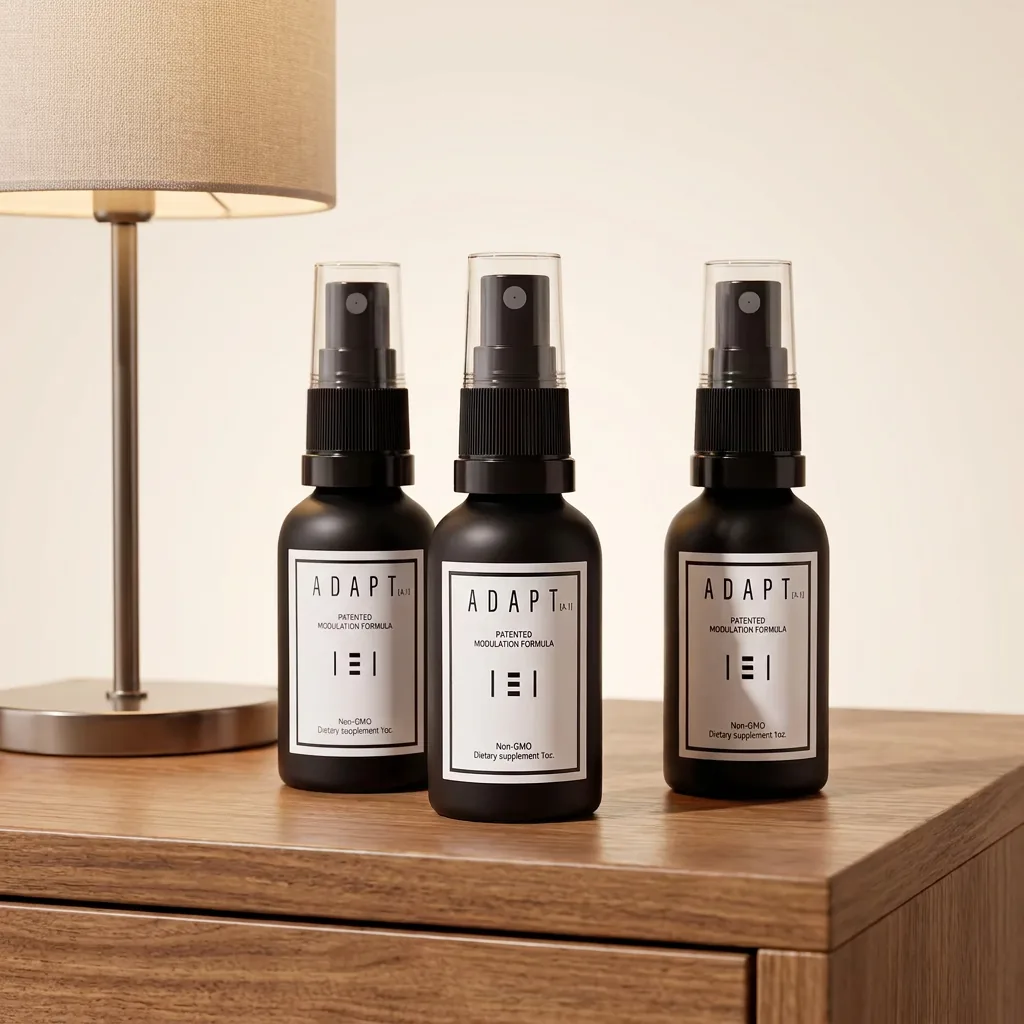
Three bottles of Adapt X.1 melatonin-free sleep aid spray on a bedside table

Where Adapt X.1 fits

Adapt X.1 is a melatonin-free oral sleep spray for adults. It has one active ingredient, Zea mays extract (60 mg per serving), in purified water with natural mint. There are no sedatives on the label.

In a double-blind, placebo-controlled trial of the formula, participants reported falling asleep 33% faster, 24% more time in R.E.M. sleep, 30% fewer wakes in the night and 40% better overall sleep quality than placebo. Individual results vary.

It may suit you if you want a short label and no melatonin. It is not a treatment for insomnia or any other condition, and it does not replace medical care.

Sleep aid questions, answered

What is a sleep aid?

A sleep aid is anything taken or used to help you fall asleep or stay asleep. The term covers over-the-counter products, prescription medicine, dietary supplements such as melatonin or herbs, and non-drug approaches such as cognitive behavioral therapy for insomnia.

Is a sleeping aid the same as a sleep aid?

Yes. People use the two terms for the same thing. A sleeping pill is narrower: it usually means a medicine in tablet or capsule form.

What is the safest sleep aid?

No product is the safest for everyone, because it depends on your health, age and other medicines. For long-term insomnia, the National Heart, Lung, and Blood Institute says cognitive behavioral therapy is usually the first treatment to try. If you take other medicines, are pregnant or nursing, or have a health condition, ask a clinician before using any sleep aid.

Are over-the-counter sleep aids safe to take every night?

Do not assume so. Many are antihistamine products, and the NHLBI advises talking to your doctor before taking them for insomnia. If you feel you need a sleep aid most nights, that is a good reason to book a visit.

Is there a sleep aid without melatonin?

Yes. Antihistamine products, herbal blends and some other supplements contain no melatonin. Adapt X.1 is a melatonin-free oral spray with one active ingredient, Zea mays extract, in purified water with natural mint.

When should I see a doctor about sleep?

See a clinician if poor sleep happens 3 or more nights a week for 3 months or longer, which is how the NHLBI describes chronic insomnia. Go sooner if you snore loudly, stop breathing in your sleep, feel very sleepy while driving, or if low mood or worry is keeping you awake.

Does Adapt X.1 treat insomnia?

No. Adapt X.1 is a dietary supplement. It is not intended to diagnose, treat, cure or prevent any disease. It is for adults who want melatonin-free support for their nightly sleep routine.

How do I take Adapt X.1?

Spray 6 to 10 sprays into your mouth and swallow, about 30 minutes before you want to sleep. Each bottle holds 30 servings. If you are pregnant, nursing, on medication or have a medical condition, talk to a professional first.
Adapt X.1